.jpg)
Content by:
David De Silva
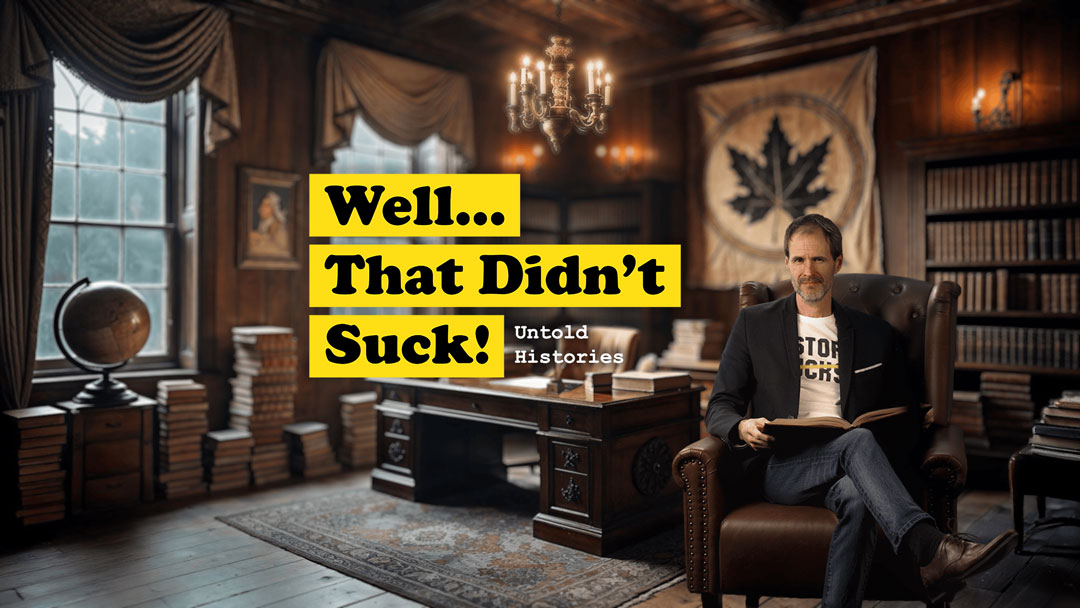
How MASH Helped Bring “Well… That Didn’t Suck” to Life
Canadian history is full of powerful, surprising stories. The challenge isn’t the content. It’s how those stories are presented.
For many students and younger audiences, traditional history formats can feel distant, text-heavy, and hard to connect with. That’s where Well… That Didn’t Suck comes in.
Created in partnership with Trent University, this short-form YouTube series reimagines Canadian history through humour, storytelling, and modern visuals. Each episode explores lesser-known moments from the past in a way that’s engaging, accessible, and designed for today’s digital audiences.
At MASH, our role was to bring those stories to life visually. And to do that, we got a little help from AI.
The Visual Challenge
Unlike modern topics, historical stories often come with limited visual material. Some events have only a single photo. Others have none at all.
Traditional solutions like reenactments or archival footage weren’t always practical, especially for “untold” stories. So instead of working around that limitation, we built a new visual approach from the ground up.
AI became the creative engine and imagination behind the series.
Using AI to Build a World
Every episode starts with Professor Chris on a green screen. From there, AI is used to build the entire world around him.
Instead of placing him in a generic background, we created a custom, story-driven environment that supports the history being told.
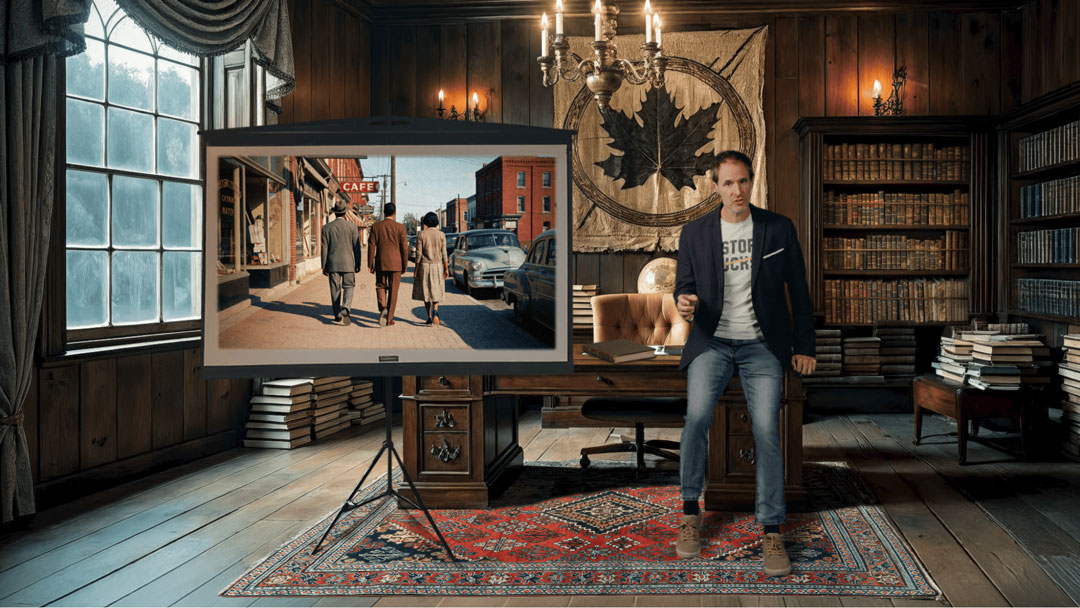
Instead of relying on stock footage, we used generative AI to create custom historical visuals, including:
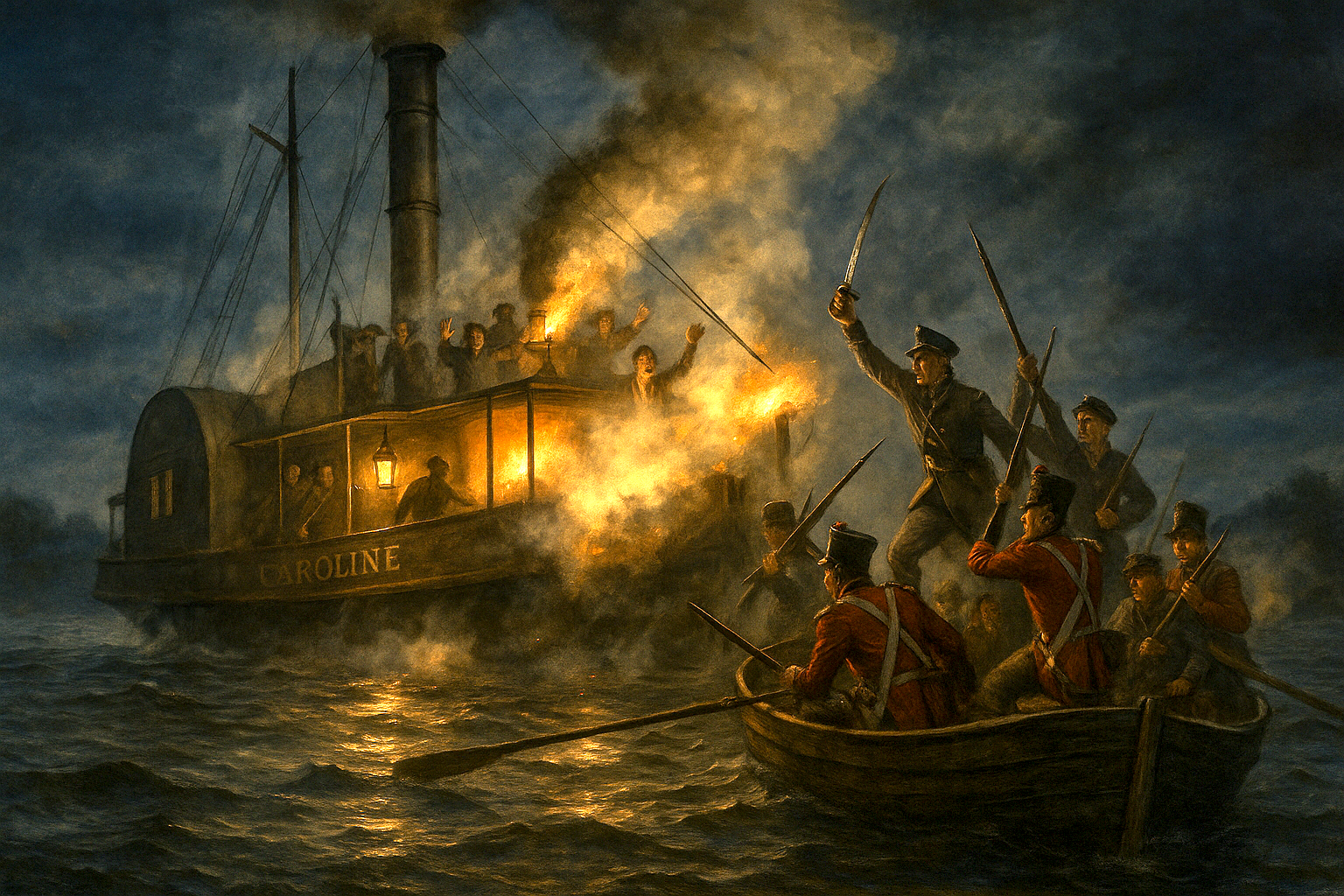

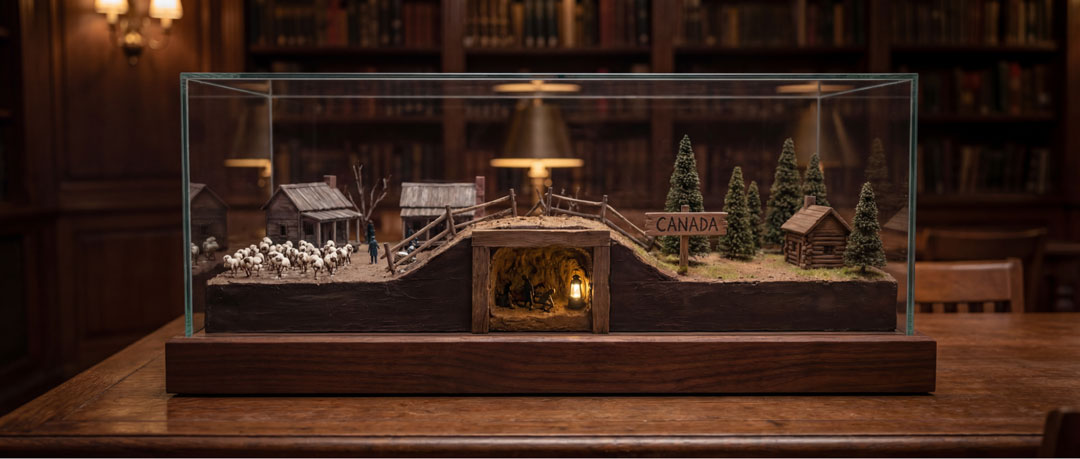
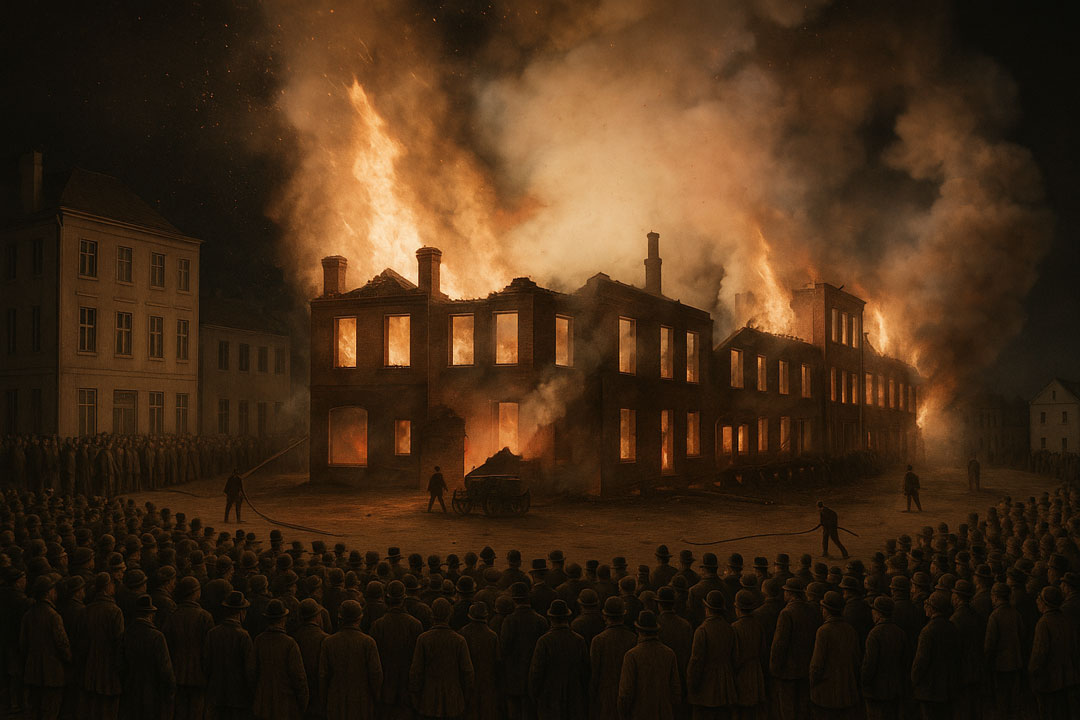
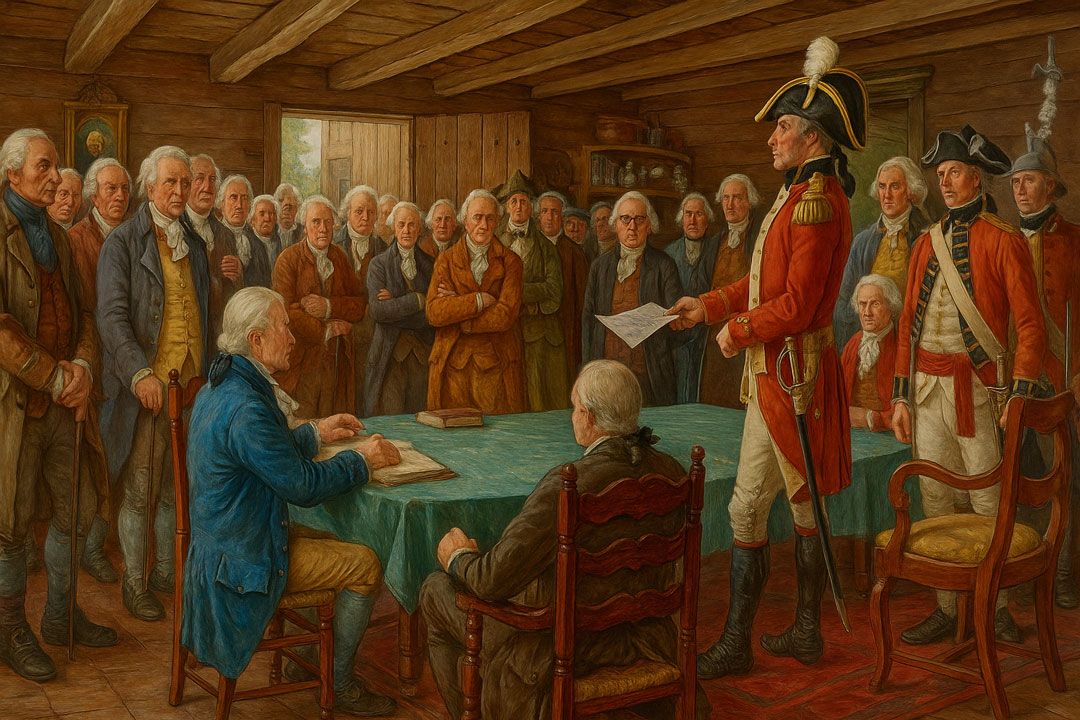
Every visual was designed to support the narrative while keeping a consistent, recognizable style across the series.
A Modern Workflow for Historical Stories
The production process blended traditional post-production tools with AI-powered visuals. To show how AI fits into the production process, here’s a simplified look at how one scene from the series was created.
In one episode, a scene focuses on Hugh Burnett and his group entering restaurants to test whether Black Canadians would be served. The moment needed to show quiet resistance, long waits, and the contrast between who was being served and who wasn’t. Because no real footage exists of these moments, the entire scene was built using AI.
Each scene begins with a production script that outlines the story beats and visual intent. This script acts as a creative starting point, guiding the overall direction of the visuals. From there, the imagery evolves through experimentation, refinement, and iteration, often improving beyond the original plan.
Next, a base image is generated, with visual adjustments refined to match the tone and composition needed for the story.
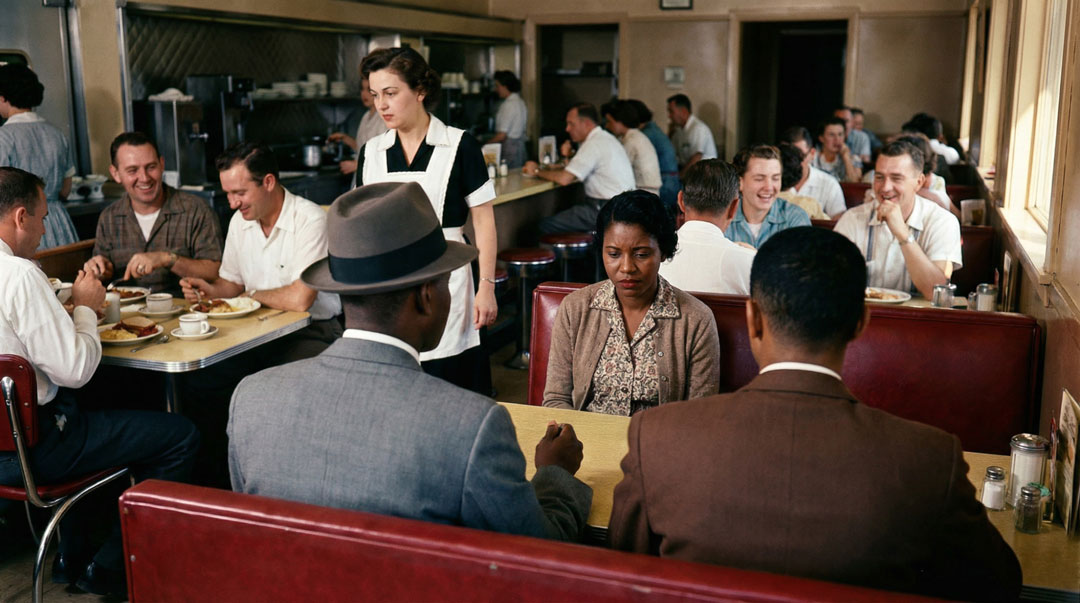
To show time passing, multiple versions of the same scene are created. The characters remain in the same positions while the environment changes around them, reinforcing the idea of prolonged waiting.
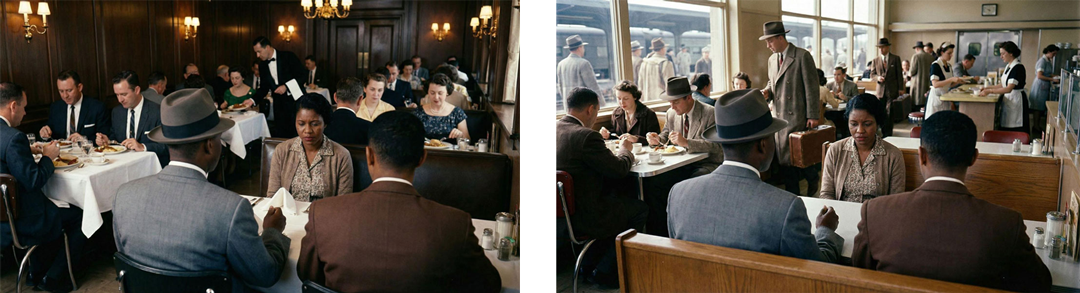
These images were then animated to create a subtle hyperlapse effect.
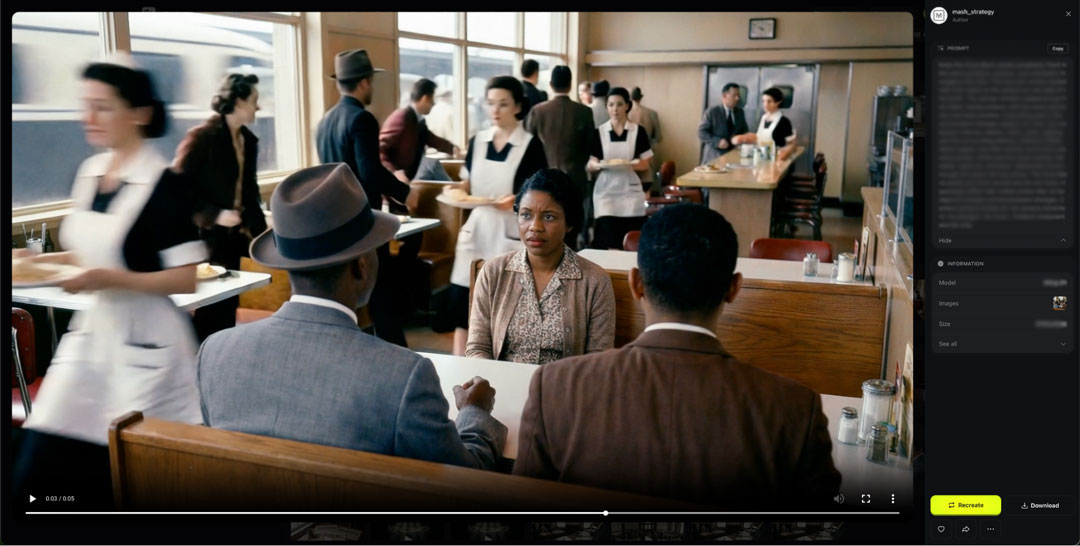
Finally, the scene is brought into After Effects for colour grading, motion polish, and overall visual consistency with the rest of the episode.
This process allows real historical moments to be visualized in ways that would otherwise be impossible.
Why AI Was the Right Fit
AI wasn’t used as a shortcut. It was used as a creative solution to expand the imagination in the storytelling.
It helped solve three major challenges:
- Limited historical footage
- Budget constraints
- The need for engaging visuals for younger audiences
By using AI carefully and thoughtfully, the team could focus more on storytelling and less on sourcing visuals that didn’t exist.
The result was a series that feels modern, visually rich, and purpose-built for digital platforms.
Just as importantly, the technology allowed for creative exploration. Visual ideas could be tested, refined, and improved quickly, helping the final scenes feel intentional rather than generic.
- Instead of replacing creativity, AI supported it.
- Instead of simplifying the message, it strengthened it.
- Instead of limiting the visuals, it expanded what was possible.
For MASH, Well… That Didn’t Suck became a case study in how modern tools can support educational content, creative experimentation, and digital-first storytelling.
And most importantly, it helped make Canadian history something people actually want to watch.
Watch the Series
Explore the full Well… That Didn’t Suck series on YouTube:
https://www.youtube.com/@Wellthatdidntsuck
You can also find the series featured on the Canadian Institute for Historical Education website as part of their learning resources.